Share This Project


Evaluating AI homelessness interventions: A practical guide for local government
About
The purpose of this guide is to help local authorities make evidence-informed decisions about commissioning, evaluating, scaling or stopping Artificial Intelligence (AI) tools in homelessness prevention. It provides practical guidance on how to evaluate these interventions in a way that is proportionate, robust and sensitive to the specific risks of working with people at risk of homelessness.
The guide encourages local authorities to move beyond short-term metrics, such as usage or satisfaction, and focus on meaningful outcomes, including homelessness duties, sustained tenancies, safety, equity, cost-effectiveness and real-world implementation.This is a practical guide, not an evaluation report, and does not present findings. It sets out what to do, and what matters, when evaluating AI tools you use or commission, using our ongoing trial of one AI housing advice tool as a worked example throughout. Findings from that trial will be published separately.
Key Recommendations
- Before you implement, ask whether AI is the answer. Carefully consider the value an AI tool adds on top of already available housing and homelessness tools and services, such as existing guidance, phone lines or webpages.
- Build in evaluation and aim for the strongest design you can support. The digital nature of these tools makes randomisation easier than you might expect.
- Measure outcomes that matter, and expect a lag - homelessness duties, sustained tenancies, contacts with the council, and whether outcomes for users improved, are as important as not just user satisfaction and hours saved. Plan and budget for longer-term follow-up.
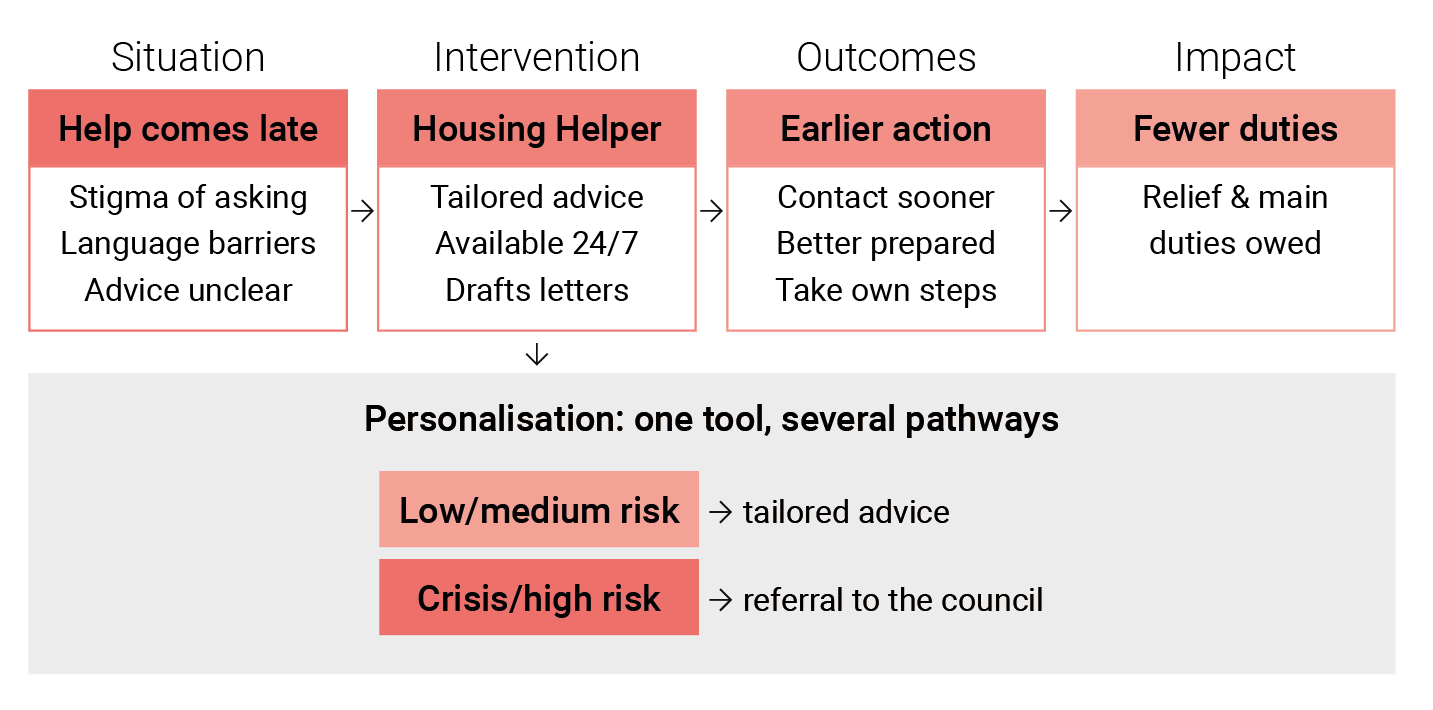
- Put the essentials in place, whatever evaluation design you use - a Theory of Change, assurance that the tool is safe and performs the core tasks it is designed for, and minimum monitoring data: usage and reach, safety incidents and escalations, and ongoing accuracy checks.
- Count the full costs and benefits - including staff time, integration, and ongoing upkeep. Include benefits to both the council, such as what a prevented homelessness duty saves in temporary accommodation spending, and to users, such as improved housing stability and wellbeing.
- Expect the tool to change mid-evaluation. Keep a meticulous change log and ongoing accuracy monitoring of the AI tool. This is particularly relevant to the homelessness sector, where statutory obligations and best practice will likely change over time.
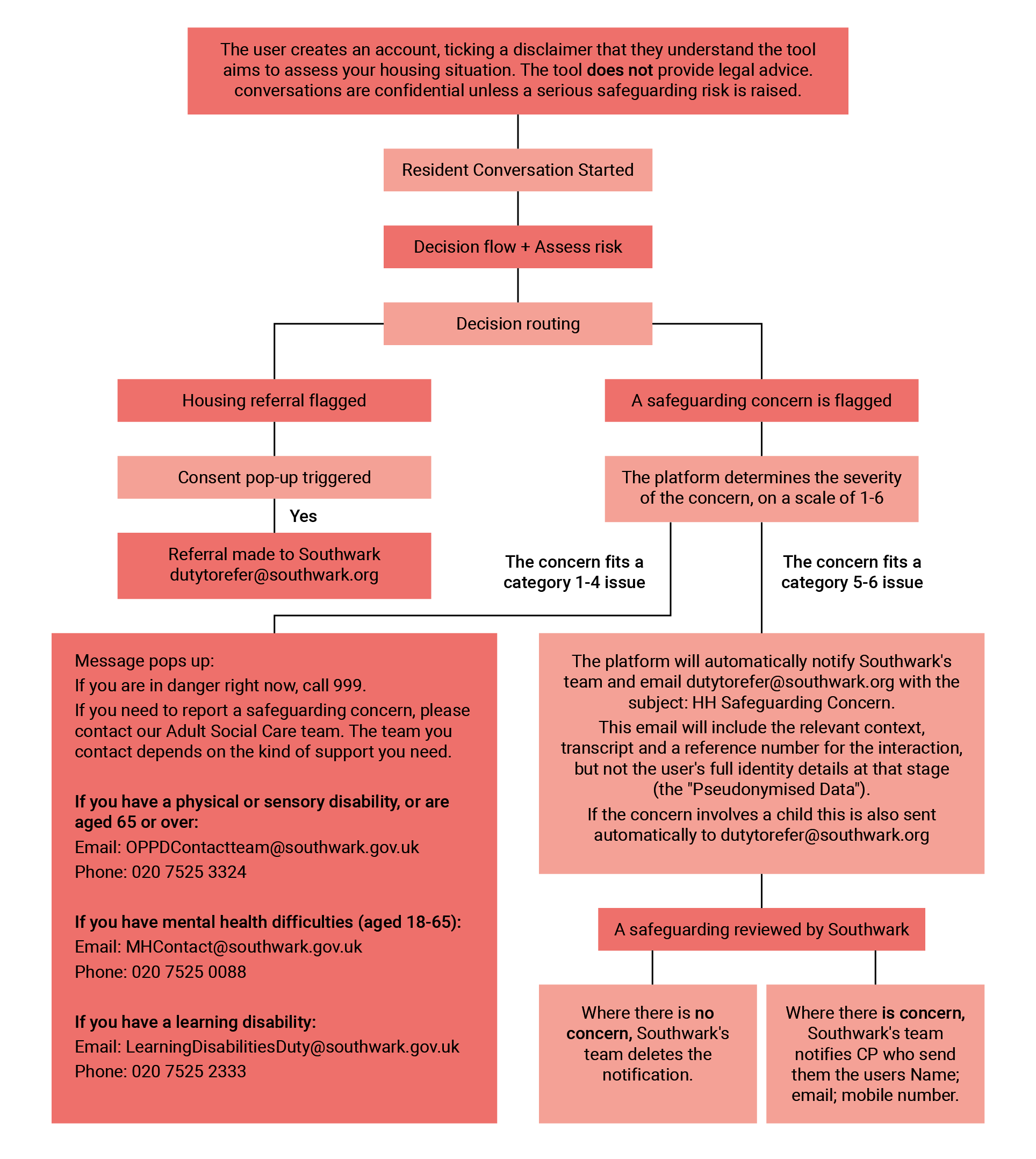
- Treat chatbot logs as sensitive data. If using generative AI, require human-in-the-loop escalation for high-risk cases, complete a Data Protection Impact Assessment, and consider an Algorithmic Transparency Recording Standard record.
- Share what you find, including null and negative results, and collaborate with other councils testing similar AI tools.