Share This Project


Mortality in people experiencing homelessness: A systematic review and meta-analysis
About
Published in the International Journal of Epidemiology (Sept, 2026), this landmark systematic review and meta-analysis provides the clearest global picture yet of the relationship between homelessness and mortality.
Led by researchers at Cardiff University and University College London, the project searched four primary databases through December 2024 and supplemented published findings with unpublished cohort data. In total, the study synthesises 116 studies involving 2,563,633 people with experience of homelessness and 129,292,553 controls. This represents the largest evidence base ever compiled on the issue.
Findings in Brief
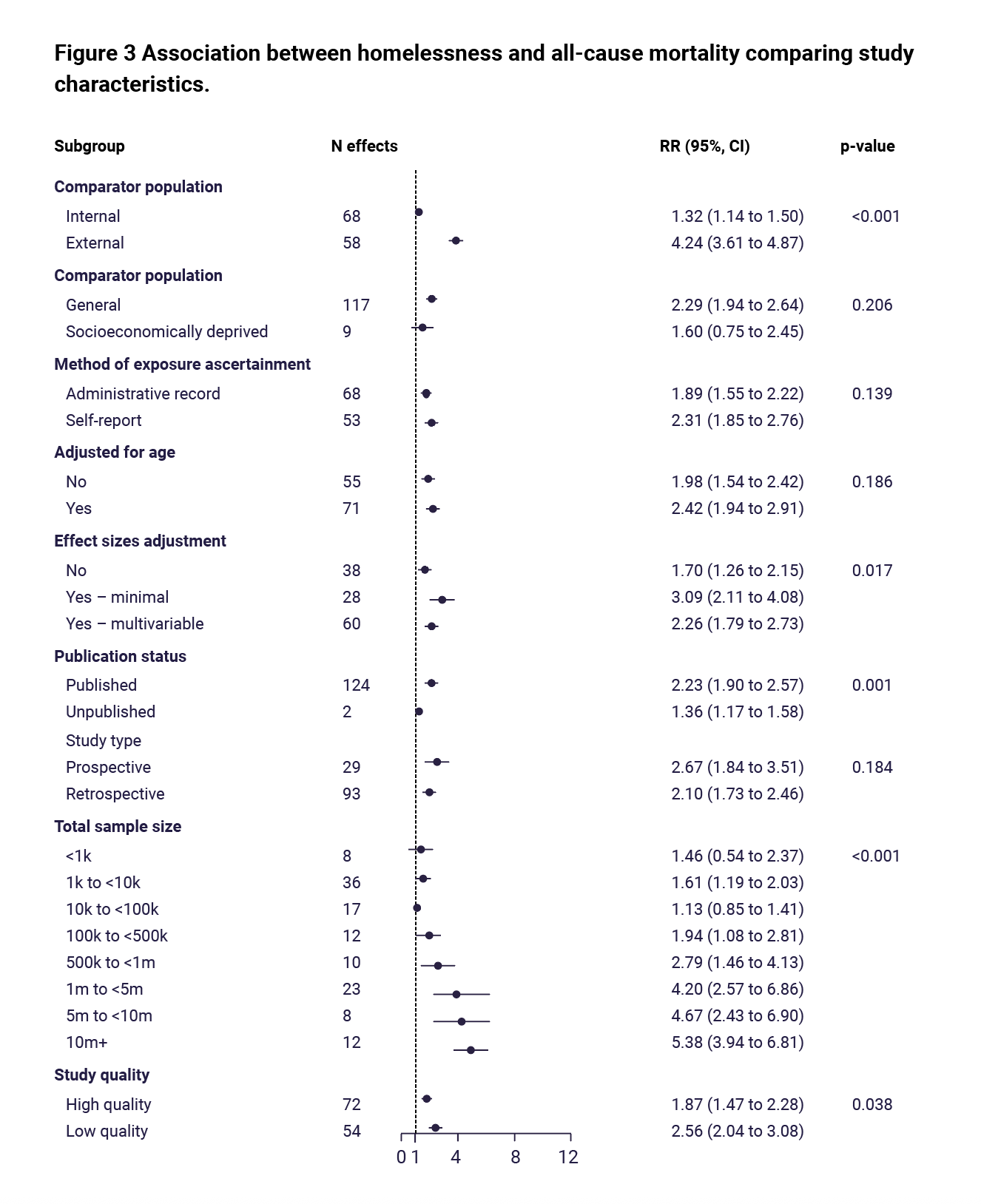
- People with a history of experiencing homelessness face around double the risk of death compared with the general population, with similar risks for men and women
- Risk was highest among people rough sleeping, followed by those in low-cost hotels and shelters
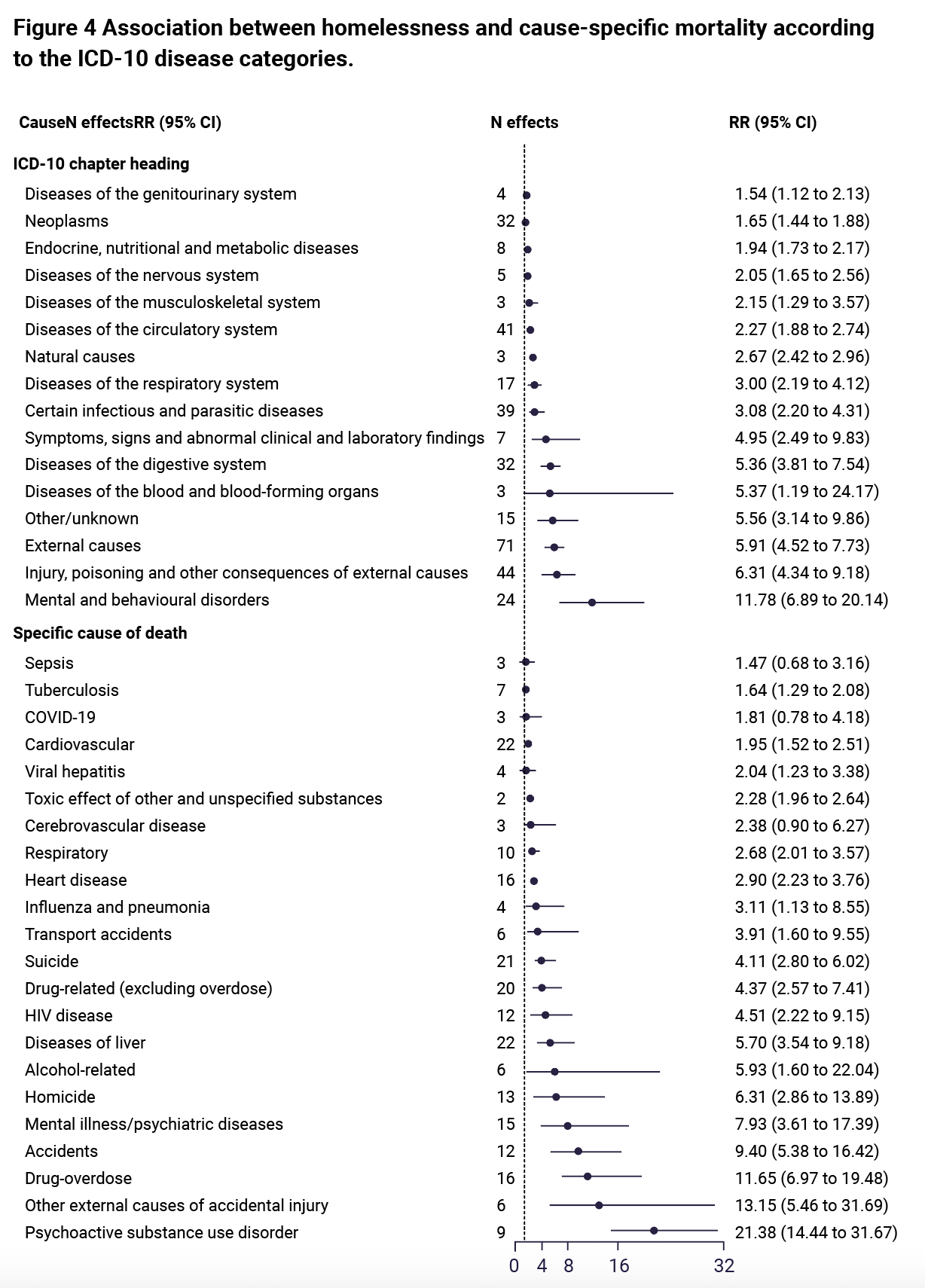
- Mortality risk was elevated for 33 of the 36 causes of death examined. The largest risk were for psychoactive substance use disorder (over 21 times the risk), accidental injury, and drug overdose
- People experiencing homelessness are more likely to die from mental illness than those who have not
- Just over half of the studies (57%) were assessed as high quality, and there was no strong evidence that the results were skewed by only positive findings getting published
- No study from a low-income country was identified, so the effect of homelessness on mortality in these settings remains largely unknown
- Homelessness itself, and many of the causes of death identified, are largely avoidable.
Recommendations in Brief
- Policy-makers, commissioners and practitioners should ask where existing systems could intervene earlier to prevent premature mortality given that evidence-based treatments and prevention strategies exist for many of these causes, particularly psychoactive substance use disorders, overdose, accidental injury and alcohol-related deaths.
- Earlier action is required in order to address elevated mortality among people exposed to different experiences of homelessness, not only rough sleeping, so that people affected by less visible forms of homelessness can get the treatment and care they need.
- Homelessness-related mortality should be approached as a mainstream health-inequalities issue rather than something seen primarily as the responsibility of homelessness specialists.
- Responsibility for identifying and acting on risks earlier should be shared across housing, health, public health, mental-health and substance-use systems, who must work together before individuals reach crisis.
- Gaps remain, with very limited evidence on sofa-surfing and no studies from low-income countries, while the observational evidence cannot on its own tell us which interventions reduce mortality. Future research could usefully focus on less visible forms of homelessness, causal pathways and the effectiveness of interventions in reducing mortality inequalities.
.png)
.png)
No items found.