


June 24, 2026
Why faith has a role to play in preventing homelessness
Revd Ian Rutherford
Some of the most important things begin not with a plan, but with a conversation.
Over the past year, a series of conversations between three friends has gradually grown into something larger. Although we came from different backgrounds and experiences, we found ourselves returning to many of the same questions. Despite the dedication of countless people working across public services, charities and communities, why do so many people still experience homelessness? Why does so much of our collective effort remain focused on responding to crisis rather than preventing it? And what role might values-led, faith-inspired leadership play in helping to change that?
As our conversations evolved, we realised we were talking about more than homelessness alone. We were exploring the role that faith-inspired individuals and organisations can play in shaping stronger communities, nurturing leadership rooted in service, dignity and compassion, and helping society think more ambitiously about prevention. What began as a handful of discussions gradually widened to include faith leaders, practitioners, people with lived experience, researchers and community leaders. What has emerged is not a formal initiative or organisation, but a growing conversation about prevention, leadership, community and the contribution that faith-inspired people and organisations might make to building a future in which fewer people experience homelessness in the first place.
It is not a new question. Faith-inspired organisations and communities have a long history of supporting people experiencing homelessness. Across the country, churches and other faith-based organisations run food banks, hostels, winter shelters, debt advice services and countless other forms of practical support. Every day, thousands of people quietly give their time, energy and compassion to help those facing hardship.
Yet as our conversations unfolded, I found myself increasingly drawn to a different question. What if some of that same energy could be directed further upstream?
Preventing homelessness is a legal responsibility. Local authorities have a central role to play, but prevention requires contributions from many different parts of society. Public services matter. Housing matters. Policy matters. But communities matter too.
When we began exploring this question together, one thing quickly became apparent. Faith-inspired individuals and organisations possess extraordinary assets that are often overlooked. They are deeply embedded in neighbourhoods. They bring together people who might otherwise never meet. They hold relationships of trust built over years, sometimes generations. They have buildings, volunteers, networks and a commitment to serving others that reaches into almost every part of the country.
Perhaps most importantly, they are often present long before a crisis emerges and long after formal interventions have ended. At a time when many institutions are struggling to maintain trust and connection, that feels increasingly significant.
The more we talked, the more we realised that this conversation was about more than homelessness alone. We are living through a period of growing division and fragmentation. Public debate often feels harsher. Communities can feel more disconnected. The pressures facing individuals and families continue to grow. When relationships weaken, people become more vulnerable. When communities fragment, it becomes harder to spot problems early and easier for people to fall through the cracks.
Homelessness is rarely caused by a single event. More often, it emerges from a combination of factors: relationship breakdown, poor health, financial insecurity, trauma, isolation and a lack of support at critical moments. Prevention therefore depends not only on effective services but also on strong communities, meaningful relationships and people willing to notice when someone is struggling.
This is where faith-inspired individuals and organisations may have a distinctive contribution to make. Not because they hold all the answers. They do not. Nor because this is a challenge that any one sector can solve alone. Rather, because they can often bring together practical action with a deeper conversation about values, responsibility, dignity and what it means to care for one another. At their best, they encourage us to look beyond immediate pressures and ask bigger questions about the kind of society we want to build.
As these conversations have continued, another theme has emerged: leadership. Again and again, I have met people who refuse to accept homelessness as inevitable. People who want to learn, improve and make a greater contribution. People who are asking difficult questions about how faith-inspired individuals and organisations can move beyond responding to immediate need and become part of a wider effort to prevent homelessness altogether.
What has been particularly encouraging is the willingness to learn from others. Some of the most inspiring discussions have brought together people working in very different contexts, from churches and community organisations to homelessness services, local authorities, researchers and people with lived experience. There is a growing recognition that good intentions are not enough. If we want to make a lasting difference, we must also learn from evidence, listen carefully to those with lived experience and be willing to challenge our assumptions.
For me, this is what makes this moment exciting. There is a growing community of people who believe we can do better. People who want to learn from one another. People who want to encourage one another. People who are committed to helping their communities play an even greater role in preventing homelessness and strengthening the relationships that make prevention possible.
One practical outcome of these conversations is a desire to capture and share what we are learning. We are therefore beginning to explore the development of a publication that could bring together the ideas, experiences and insights emerging from this growing community. Our hope is not to produce a manifesto or a set of instructions, but something that can stimulate discussion, challenge assumptions and offer practical inspiration to those interested in prevention. While faith-inspired individuals and organisations are an important part of this conversation, many of the themes we are exploring — leadership, prevention, belonging, community and social connection — have relevance far beyond faith settings.
We hope that, in time, this work can help provide both encouragement and challenge: encouragement to those already making a difference in their communities, and challenge to all of us to think more ambitiously about what prevention requires. If faith-inspired leaders can help spark that conversation, then perhaps they can make a contribution that extends well beyond homelessness itself.
Where these conversations ultimately lead remains to be seen. We are exploring ideas, building relationships and considering how best to share what we are learning. In time, that may include gatherings, publications and opportunities for wider collaboration. For now, however, the most important thing is the conversation itself.
If you are curious to know more do get in touch. The challenge of homelessness is complex, but by learning from one another, strengthening relationships and raising our collective ambition, I believe we can make a meaningful contribution to preventing homelessness and building stronger communities in the process.
And that is surely a conversation worth having.
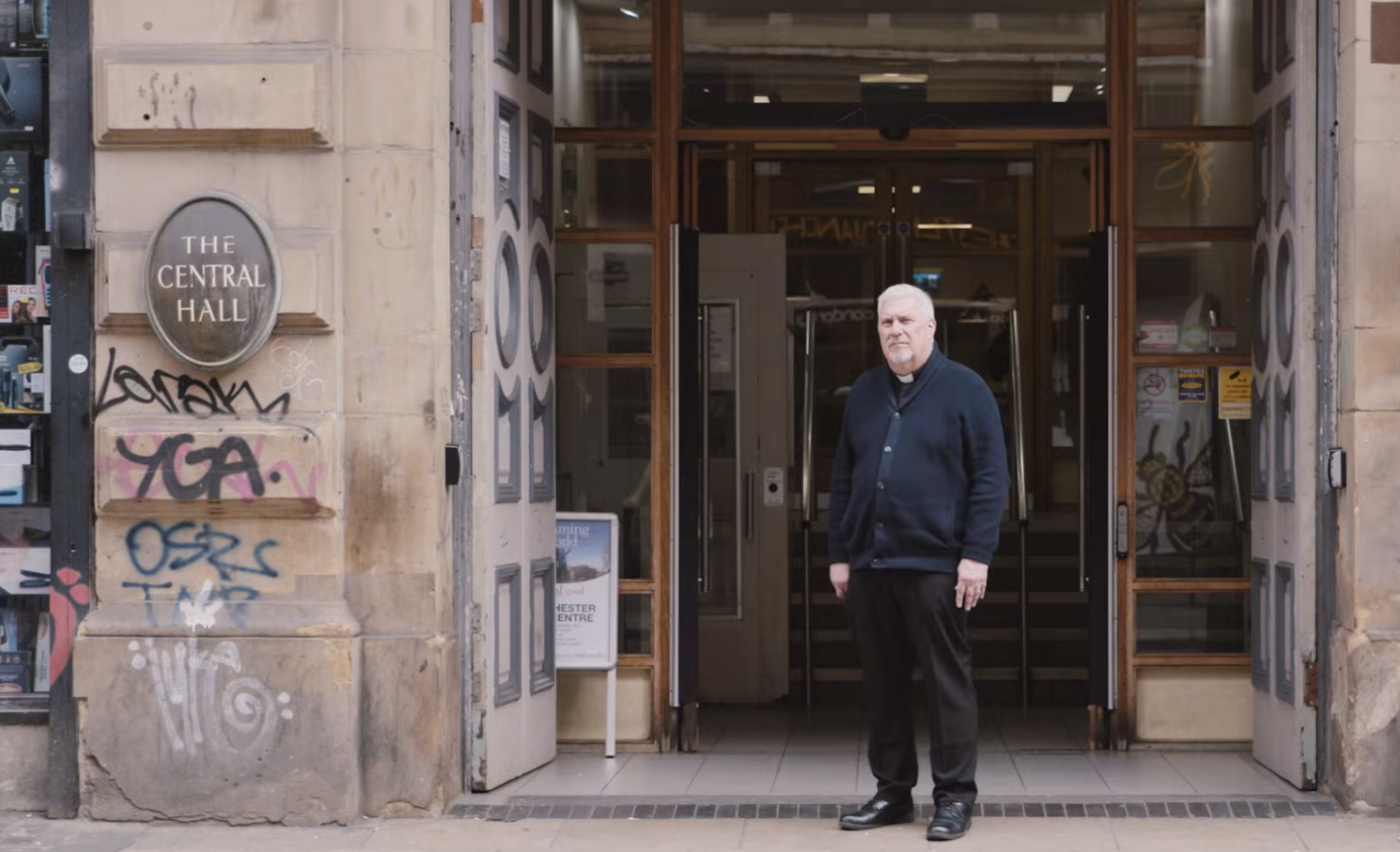
- The Revd Ian Rutherford is City Centre Minister at Methodist Central Hall Manchester


